Thursday, April 29, 2010

generational marketing-the tween market.

The tween.

So, whats the best way to describe a tween? A tween is a female, usually between the ages of 9-14. The fancy word to describe a tween is "pre-adolescene": they're entering- and stuck- inbetween childhood and that awkward stage in life called adolescence. Or think of this saying: "too old for toys, but too young for boys". It's interesting to note how "tweens" have changed from my era, to the present day. In my my day (gosh I sound old!), I was into innocent fads such has the Tamagotchi, Yo-Yo's and I absolutely adored girl groups of the 90's such as The Spice Girls and All saints. Today the tween is obsessed with make-up, the latest fashion trends within their target group and older pop icons such as this girl....


Ah,Miley Cyrus. Famous for her alter ego, Hannah Montana, a fictional character who is an average teenage girl by day,and a mutli-million selling pop star by night. This phenomenon has been spectacular, and has spawned a multitude of movies, books, DVD's, children toys in it's wake. Love her or loathe her, it's been a nice little earner for Cyrus, making her an estimated $40 Million USD. It's also been predicted that Cyrus will be a billionaire by her early 20's! But is Cyrus really a good role model? Who can forget those racy pictures from 2008, that Annie Lebowitz photograph that had parents up in arms and that unforgettable performance at the kid's choice awards that saw a young Cyrus scantily clad and dancing on a pole? Perhaps not the best role model for children! But in reality, who cares? Certainly not the big corporation that bought Cyrus fame: Disney- Thanks to Cyrus and her Disney peers such as The High School Musical cast, they're rolling in it!

It's no secret that marketers favourite target market is the tween, this marketing tool has been used for years! I'm sure my age group will remember these two ladies...


This marketing tool hardly comes as a suprise: according to Soloman (2006), the tween market spent $14 billion on a multitude of items such as clothing, films/TV, CD's and other products aimed at the tween target market.
So why is the tween market a good market to target? Well, it's mainly down to the values of the tween market really- it's important for them to read the latest glossy magazines aimed at their market and to keep up with the latest fashion and social trends (it somewhat ties in with the importance of belonging within a peer group). It's also important to note that tweens usually have a close circuit of peers, more notably the females. Tweens often buy into products that make them seem appear more "cool" and seem more mature and older- Hence why idols are often a lot more older then the target audience.

Targeting to tweens often faces scruitny within modern society. Most people argue whether it is moral or not to target such "mature" products- even any products at all- to such a vunerable target market. Me personally, as someone who wants to seek a career in this field has to remain indifferent as well as open-minded. But who knows? My opinions may change once I have a brood of my own...


Here are a few interesting links to articles surrounding the subect matter I have been discussing!

XOXO

Social Class.

Social class is a very much talked about and controversial topic within our society. But how do we define "social class?" Soloman states that social class consists of "a complex set of variables, which includes income, family background and occupation". But is it really that simple? Firstly, it has be acknowledged that what people classify as a certain social class can vary according to country and personal beliefs and values instilled in a person.

Look at this interesting video we viewed in class which features John Cleese, Ronnie Barker and Ronnie Corbett. --

despite it being a satorical view on Social demographics, I believe it is a very accurate view on how people from different background are often percieved by one an

todays' socio-economical classes are as follows:-

- A= Upper middle class
- B= Middle class
- C1= Lower Middle class
-C2=Skilled working class
-D= Working clas
- E= Lower class

The way we define social class often comes under scrutiny for a number of reasons one of the main ones being that in the typical family household, it is usually the "breadwinners" or "head of the houses'" income that is counted, rather then taking in ALL sources of income within the family home (i.e any money children might earn, etc). Also, it is often argued that the class that a person may appear to be in, does not have to be one they automatically belong too. This all relates to where the person in question may live, or the occupation of the person. Which brings me onto another important question: what defines Social class? Income? Behaviour? Educational background? family background? One way to look at it is by using this lady as a prime example:


Ah, the nations sweetheart (?) we all know and love Miss Katie Price. Price is hardly known for her Degree in political science, yet she boasts an estimated net worth of £40 million- surely this is proof that it must be income alone that defines the social class you belong to (as well as the old saying "money can't buy you class!) It is very apparent that marketers target their consumer with certain products according to the social background they are from. Usually this is purchases that can be somewhat low cost, but at the same time can easily symbolise what class you belong to. One notable example could be cosmetics for women. example:


This is a foundation by high fashion retailer Christian Dior. It is valued at £27.00,and can be found at upmarket retailers such as House of Fraser and John Lewis. Although £27.00 is not a large figure, it can be deemed quite a dear price for a little old foundation!...

Meanwhile.....


Here, we have a foundation by cheap and cheerful cosmetics brand, Collection 2000. Valued at at £3.29, and can be found in high street health and beauty retailers such as Boots and Superdrug!

It's important to note that both these products more or less do the same job, therefore backing up the theory that which one you pull out of your handbag, can be an indicator of personal income and social status!

Social status and income can also have an effect on more higher priced materials such as cars and homes, because those who are spending the highest prices on these goods, are automatically going to be identified as the more superior class of all! So, yes it is safe to say that marketers know the right target market, along with the consumers buying patterns and the social class they are most likely to belong to. However, they don't always get this right. Remember how Burberry went from this...


...to this...


Oh dear....

Hopefully this pretty much sums up what social class is, how it is percieved to those in modern society and how marketers target the typical consumer according to social demographics!
XOXO


Sunday, April 25, 2010

Gender.

Ah, the age old saying: Men are from Mars, Women are from Venus. Which in my opinion couldn't be more true! You just have to look to the men in our modern society, well known jokes and riddles refering to men and their ways- It's been even been proven scientifically! It's been stated that Women tend to think with the right side of their brain which is the more visual, creative and intuitive side of their brain, whilst men often think with the left side of their brain, which is very the basic, more "to the point using logic" side of their brain.


check out this video we watched in class! Its a humerous look into how different men and women really are!


** http://www.youtube.com/watch?v=GuMZ73mT5zM- a satorical look at the differences between the male and female brain by Mark Gungor. **


gender differences within advertising

Gender differences within advertising has been researched by Schiebe & Condry (1984). Advertisements were analysed according to the type of product being advertised and it was found that the values being promoted within advertising aimed at male and female audiences differed significantly. It was found that that advertisements aimed at females centered around the importance of health, beauty and vitality, whilst advertisments aimed at men centered around the inportance of physical strength and and ambition.

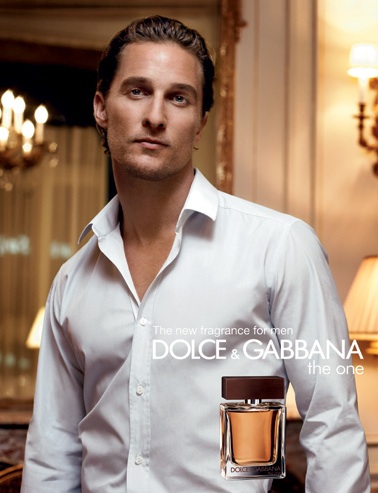
one notable example of this I found were these 2 adverts by prolific fashion house, Dolce and Gabanna. Each of these adverts are aimed at a male and female target audience.:


note that the mens advert is kept simplistic, and to the point: just as we discussed earlier about a mans behaviour and way of thinking! The use of actor Matthew Mconahay- a common staple in films aimed at a male target audience as well as the stereotypical ideal of the "strong, masculine male- could also be a form of "aspirational advertising" for the male target audience. Also note how monotone and simplistic the mise-en-scene, lighting and colours used are as well! However, the female one uses a lot of shades and colours and there is a lot going on in the background. The ensambles worn for the print ad are visable to the eye: perhaps a play on womens' ability on focusing on every detail- thus a lot of sales and a very happy fashion house! I believed that these 2 print adverts are a good example of the theory, as one promotes strength and masculinity, whilst the other promotes beauty and vitality. It also demonstrates how the mae and female mind differ in terms of thinking when something is presented to them.


Interestingly enough, we often see items for males targeted at a female audience- a clever ploy adapted so that women can indulge their significant others in the said item- again, leading to a very happy company (:


In class we conducted two interesting experiments. The first experiment involved looking at this picture:


As a class, we were asked to highlight what we spotted in the picture, after viewing it for a brief moment. Here are a copy of my class notes, highlighting what I spotted and stored within my memory after those few minutes:


*telephone on desk
*2 chairs on either side of the desk
*painting in the background
*the round carpet
*the windows and doors on the right had side
*the two sofas in the background
*the two lamps in the background
*the big grandfather clock on the right hand side near the window and door
*the fireplace at the back of the room
*I even went as far as to create a scenario as to what the room is for: my conclusion? it very much looks like the room that could be situated in a place such as the white house!

this experiment was conducted to back the theory that females often pay attention to small detail and are able to cite a lot of things from memory, as opposed to their male counterparts that often just spot the more "apparent" rather then looking deeper and focusing beyond that.

we were then asked to view the following television adverts:

http://www.youtube.com/watch?v=blWd3iixIJc- An advert for charity organisation Banardos
http://www.youtube.com/watch?v=RMwt28P_xSQ- An advert for another charity organisation Cancer Research UK.
http://www.youtube.com/watch?v=tijSx_fwoM0 - An advert for give blood.

after viewing each advert, we had to discuss which charity organisation we were most moved by emotionally. I personally (as well as the majority f the females in the class) chose both Banardos and Cancer Research UK as having the most impact on me emotionally. This is due to the fac that as females, we tend to use the right, more emotional side of our brain. The males were more swayed to the give blood advert, which did not evoke any emotion, but instead was straight to the point in explaining what the charity organisation is and what you can do to help.

In conclusion, what have we learnt today? That men are from Mars, and women are definately from venus (:

Useful link of the day!- http://www.bbc.co.uk/science/humanbody/sex/add_user.shtml

An interesting test to show you whether you have a "male" or "female" brain! Try it- the results could shock you! (mine did, even though my brain was mostly that of a "female" one, it was found that I do indeed possess some male thinking chracteristics!)

XOXO.


Enterprise week :)


During reading week, we had to attend enterprise week, where a panel of industry experts came in to answer any questions us students had! the panel consisted of the following people:-

- Matthew Chapman: International Service and Systems Innovation Director Billetts

- George Hutchkinson: Chair and Managing Director Public Affairs, Burson-Marsteller UK

- Rik Haslam: Group Creative Architect for company WWV Rapp

- Sue Unerman: The Chief Strategy Officer for Mediacom

Sue Elms: Executive Vice President, Global Media Practice for Millward Brown

The panel was highly insightful, and we were given useful information regarding the media industry and how to successfully gain access to it! Advice included tips on what to include on a CV and the importance of gaining work experience.
We also got the opportunity to find out how marketing communications has evolved in the 21st century and the role advertising has played for us in modern times. We learned how avertising has evolved due to brands being advertised rather then just the product itself! We also touched upon how the usage of digital marketing has been successful mainly due to social networking website such as facebook and twitter.


conclusion: Digital media has had a MASSIVE effect on marketing communications and our society as a whole!
some useful links below :)

Perception: Social Experiment.


Recently, we have been learning about how modern society percieve things at face value, as well as perceptions that are "the norm" within modern society. As a part of this, in class an interesting experiement was conducted, where groups of people had to bring in 2 of the same product for consumption i.e crisps, biscuits, etc and note which ones they personally preferred. One experiement was conducted using tesco economy crisps and well known brand walkers crisps-people who took part in the survey had no idea which one was which. Interestingly enough, more people preffered the economy crisps! This shows that as a society, we are more likely to be swayed towards the familiar and the socially exceptable, and often shun what we deem as "cheap" or the unfamiliar!